About Automatic Digital Polarimeter
Specification
|
MODEL
|
ADP45
|
|
ADP90
|
|
Make
|
|
LABMAN
|
|
No. of Measuring Mode (4)
|
Optical & Specific Rotation
|
Optical Rotation, Specific Rotation, Sugar, Concentration
|
|
Measuring Mode
|
Rotation
|
|
Measuring range
|
-45 +45
|
-90 + 90
|
|
Unit
|
Angle
|
|
Resolution
|
0.001
|
|
Accuracy
|
i0.01
|
i0.004
|
|
Measuring Mode
|
Sugar
|
Sugar
|
|
Range
|
i259Z
|
i259Z
|
|
Unit
|
Z
|
|
Resolution
|
0.01Z
|
0.001Z
|
|
Accuracy
|
i0.02Z
|
i0.004Z
|
|
Measuring Mode
|
Concentratio
|
Concentration
|
|
Range
|
0"99.9g/ml
|
0-100g/ml
|
|
Unit
|
g/100 ml
|
|
Resolution
|
0.1mg/ml
|
|
Accuracy
|
-/+0.5g/100ml
|
|
Temperature control
|
Peltier
|
-
|
Peltier (Built In)
|
|
Temperature control range
|
-
|
10-50 C
|
|
Accuracy
|
-
|
i0.1 C & i0.2C
|
|
Constant temp. test tube
|
-
|
100 mm
|
|
Memory
|
General spec
|
-
|
5000 data sets
|
|
Display
|
8i Colour datamatrix Touch Screen
|
|
Sample transmittance
|
> 1%
|
> 0.1%
|
|
Light Source
|
LED (2.4V, 1W, 5000hours)
|
|
Operation Wavelength
|
589.3nm
|
589.44nm
|
|
Length of Test Tube
|
100mm & 200mm
|
|
Power Supply
|
Adaptor, Using AC 220V,50/60Hz
|
|
Interface
|
USB & RS232C
|
USB Ethernet
|
|
Dimension (LxWxH) mm
|
850 x 470 x 380
|
745 x 410 x 295
|
|
Weight
|
35kg
|
42kg
|
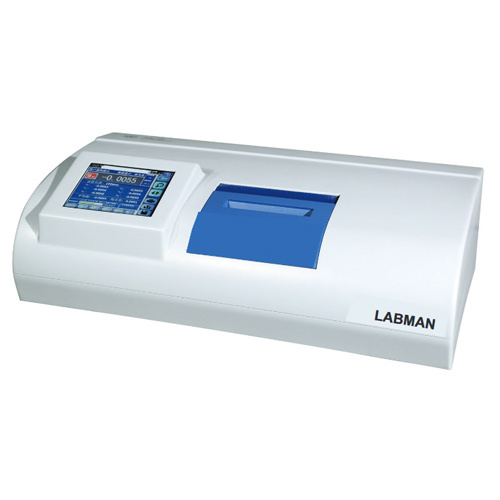
Accurate and Efficient Optical Rotation MeasurementThis automatic digital polarimeter utilizes a sodium lamp at 589 nm to provide high-precision optical rotation measurements with a resolution and reproducibility of 0.01. Automatic zero calibration and user-friendly digital LCD display result in swift and reliable results, making it ideal for routine analysis in scientific laboratories.
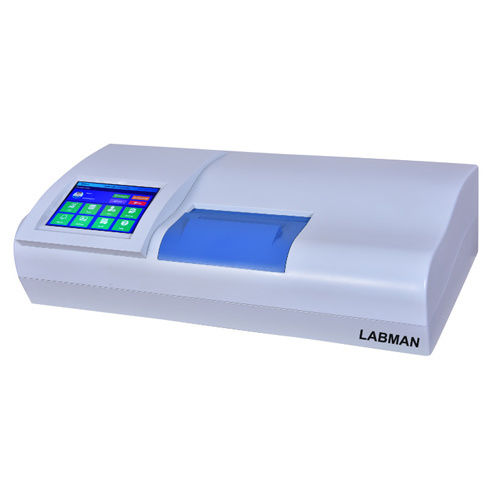
User-Friendly Design and ConnectivityFeaturing a robust ABS plastic body and a glass sample tube, the instrument ensures long-term durability. The 4-inch digital LCD screen displays readings clearly, while the RS232 interface allows seamless data transfer to your computer for documentation and further analysis.
Applications and Benefits in Laboratory SettingsSpecially designed for laboratory use, this polarimeter is suitable for quality control, research, and educational purposes. The automatic measurement and digital readout facilitate quick and precise workflows, helping reduce human error and enabling large sample throughput without compromising accuracy.
FAQ's of Automatic Digital Polarimeter:
Q: How does the automatic digital polarimeter ensure accurate measurements?
A: The polarimeter is equipped with automatic zero calibration and a high-quality sodium lamp (589 nm), providing precise optical rotation readings with an accuracy and reproducibility of 0.01. The digital LCD display minimizes human error and guarantees reliable results.
Q: What is the typical process for measuring optical rotation with this instrument?
A: To measure optical rotation, simply fill the glass sample tube (100 mm or 200 mm) with your solution and place it in the polarimeter. The device automatically calibrates and processes the measurement, delivering results digitally within 30 seconds.
Q: When is it appropriate to use this polarimeter in the laboratory?
A: This instrument is ideal whenever precise optical rotation or concentration measurements of optically active substances are required, such as in chemical, pharmaceutical, food, and academic laboratories.
Q: Where can I connect the polarimeter to a computer for data management?
A: The polarimeter features an RS232 interface, which allows for direct connection to a PC. This enables efficient data transfer, record keeping, and integration with laboratory information systems.
Q: What are the benefits of choosing an automatic digital polarimeter compared to manual models?
A: Automatic digital polarimeters provide faster, more consistent measurements with minimal manual intervention. Automatic calibration, quick reading time, and digital data output enhance laboratory productivity and reduce the risk of human error.
Q: How does the equipment perform under various laboratory conditions?
A: This polarimeter operates reliably within temperatures of 0C to 50C and relative humidity up to 80%, making it suitable for most standard laboratory environments.





 Send Inquiry


 Send Inquiry
 Send Inquiry
 Send SMS
 Call Me Free