About Laboratory Stability Chamber
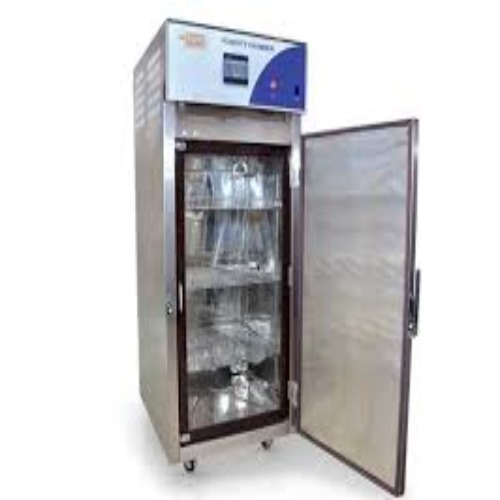
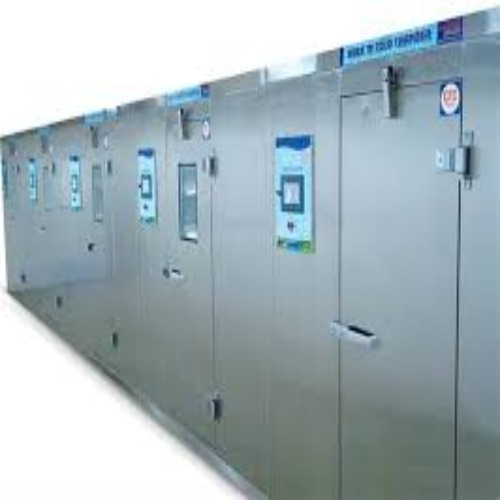
- Astability chamberis a device used to artificially replicate various environmental conditions by procedurally altering just two specific factors. Temperature and relative humidity. Astability chamberis thus used comprehensively in the testing of drugs & medicines in the pharmaceutical industry, to determine the basic shelf-life of the said drugs along with their resistance to environmental changes. Thestability chambercan be classified into environmental chambers, temperature i humidity chambers, accelerated test chambers, and photo stability chambers, cold chambers, depending on the respective parameter of testing. Physically, they are classified into reach-in chambers which are smaller in size, and walk-in chambers which are large enough to be walked into. Astability chamberworks by using compressors to maintain the temperature in the chamber, and thus, the relative humidity, which it also does by the use of a separate water reserve through boiler heater. As a leading stability chamber manufacturer, our innovative designs and precise engineering contribute to the reliability and performance of these essential testing devices.
-
CONSTRUCTION
- Insulated Chamber interior made of stainless steel with mirror/dull finish.
- Exteriors with model options of Stainless steel and G.I. Powder Coating.
- Illuminated Interior with full-view glass door.
- Heavy-duty door hinges & latches to maintain a secure & uniform seal
Advanced Performance for Stability TestingThis chamber delivers excellent temperature and humidity uniformity with an accuracy of 0.2C and 2.0% RH. Its versatile temperature range from 20C to 60C ensures suitability for various laboratory protocols, including pharmaceutical, food, and material testing. The sturdy construction guarantees long-term reliability and consistent performance even during extended usage.
User-Friendly Operation and DesignConstructed from high-quality Stainless Steel 304 or MS powder-coated materials, the chamber is corrosion-resistant and easy to maintain. The digital or touch screen interface allows users to program and monitor parameters effortlessly. Its compact footprint and 90-liter capacity make it an excellent choice for laboratories with limited space but high standards of precision.
FAQ's of Laboratory Stability Chamber:
Q: How do I operate the Laboratory Stability Chamber's control system?
A: The chamber features a digital or touch screen interface, making it simple to set and monitor temperature and humidity parameters. Follow the user manual provided to program your specific requirements and easily visualize real-time data on the display.
Q: What makes this stability chamber suitable for laboratory use?
A: Its precise temperature (0.2C) and humidity (2.0% RH) control, robust stainless steel 304 or MS powder-coated construction, and a 90-liter capacity make it ideal for laboratory applications such as stability studies, quality control, and shelf-life testing.
Q: Where can this stability chamber be installed and used?
A: This chamber is designed for laboratory environments in research, pharmaceutical, and industrial quality control settings. Its compact 450 x 450 x 450 mm structure allows placement on laboratory benches or dedicated stability rooms.
Q: What is the process for conducting a stability test in this chamber?
A: Simply load your samples onto the shelves, set the desired temperature and humidity via the control panel, and allow the chamber to create the conditions needed. Monitor the environmental parameters throughout the test for consistent, reliable results.
Q: When should I schedule maintenance for this equipment?
A: It is advisable to perform routine maintenance checks every six months, and clean the chamber regularly. Refer to the user manual for specific guidelines. The product comes with a 12-month warranty against manufacturing defects, ensuring support if issues arise within this period.
Q: What are the main benefits of using this stability chamber?
A: The chamber offers reliable environmental control with high accuracy, easy operation, and durable build quality. These features help ensure reproducibility in testing, protect sample integrity, and enhance workflow efficiency in laboratory processes.





 Send Inquiry


 Send Inquiry
 Send Inquiry
 Send SMS
 Call Me Free