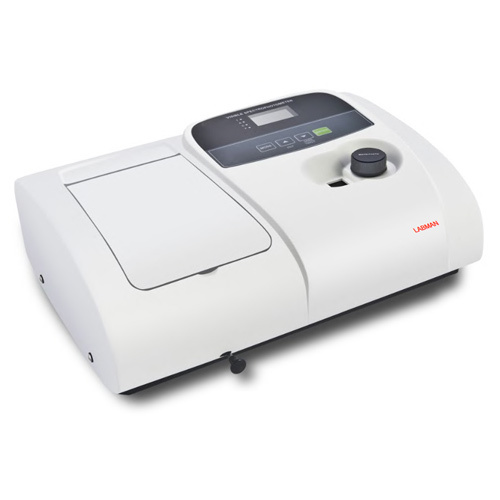
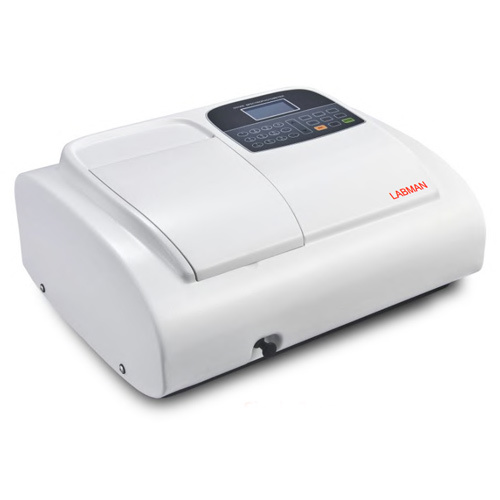
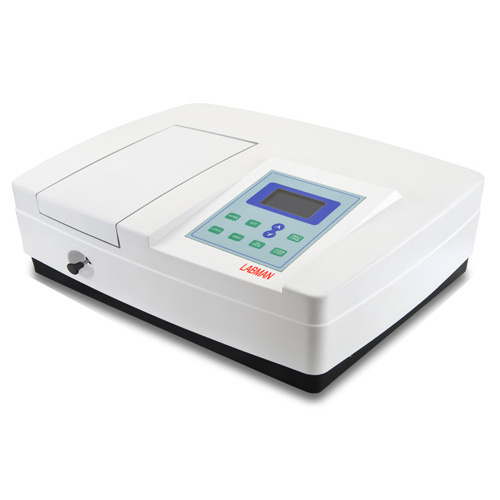
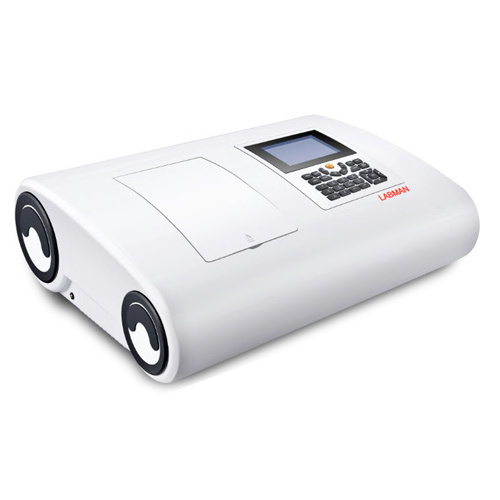
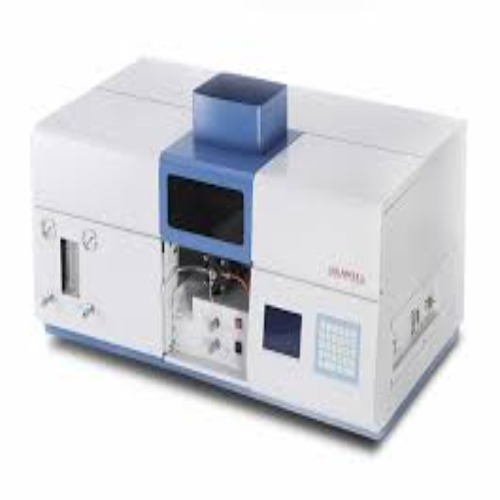
About Visible Digital Spectrophotometer
Grating Monochromator : uses 12000line gratingwhich ensures high resolution, low stray light and parameters accuracy. Standard Curve: can set up various standard curves according tocustomer s solution and find the concentration of unknown solution.
Data output: equipped with USB port to connect with a PC to editdata through specific software . Datacan also be printed through a parallel port connected to a micro printer.Compact design easy to carry.
Auto setting wavelength., LCD Display
Largesample compartment, it can accommodate 5-100mm path length cuvette withoptional holders
DisplayMode: Can display absorption, transmittance, concentration and coefficientdirectly by different mode switching.
Accurate and Reliable Laboratory AnalysisEngineered for high precision, the Visible Digital Spectrophotometer 301 features a wavelength accuracy of 2 nm and photometric repeatability of 0.001 Abs, making it ideal for robust quantitative and qualitative research. The instrument's digital LED display offers instant, direct readings and simplifies data handling for users engaged in a variety of laboratory applications.
Robust Design for Enhanced DurabilityConstructed with a metal body and powder coated finish, this spectrophotometer is built for lasting performance in demanding research environments. Its 4-position cuvette holder and user-friendly controls support routine sample analysis, while the long-life Tungsten Halogen lamp minimizes maintenance and downtime.
Versatile Analytical CapabilitiesWith a measurement range spanning 340 nm to 960 nm, the instrument accommodates diverse applications, including biochemical estimations and chemical research. The spectrophotometer's broad sample capacity (1 ml to 10 ml) and advanced features, such as auto zero and direct concentration, enhance efficiency and laboratory workflow.
FAQ's of Visible Digital Spectrophotometer:
Q: How is the wavelength set and measured on the Visible Digital Spectrophotometer 301?
A: The wavelength is set manually using the provided controls, allowing users to select specific wavelengths within the 340 nm to 960 nm range. The instrument maintains high wavelength accuracy, ensuring precise and reliable results for a variety of analytical applications.
Q: What are the benefits of using a single beam optical system in this spectrophotometer?
A: A single beam optical system offers straightforward operation, less complex alignment, and lower maintenance. This design ensures high stability and excellent repeatability, which are essential for routine and advanced laboratory analyses.
Q: When should the lamp in the spectrophotometer be replaced, and what is its expected lifespan?
A: The Tungsten Halogen lamp has an average life of approximately 2000 hours. It should be replaced when you notice diminished intensity, increased drift, or stability issues to maintain measurement accuracy.
Q: Where can this spectrophotometer be optimally used?
A: This model is best suited for academic, industrial, and research laboratories in India or similar settings. Its robust build, versatility, and precision suit routine lab work, biochemical estimations, and advanced research analyses.
Q: What is the process for analyzing samples with this spectrophotometer?
A: Samples are prepared and placed in matched 10 mm glass cuvettes. Using the manual wavelength setting, users select the desired measurement range, insert the cuvette in one of the four positions, auto-zero the instrument, and obtain direct digital readouts. The process is efficient and minimizes user error.
Q: How does the direct concentration facility benefit laboratory workflows?
A: The direct concentration facility allows users to obtain concentration values without manual calculation or conversions, streamlining data recording and enhancing laboratory productivity by reducing time and potential errors.
Q: What safety or usage considerations apply to this equipment?
A: Ensure the instrument is connected to a 230V AC10% power source and placed on a stable surface. Handle glass cuvettes with care, regularly check for lamp performance, and operate the device within ambient temperature conditions to ensure accuracy and equipment longevity.





 Send Inquiry


 Send Inquiry
 Send Inquiry
 Send SMS
 Call Me Free